
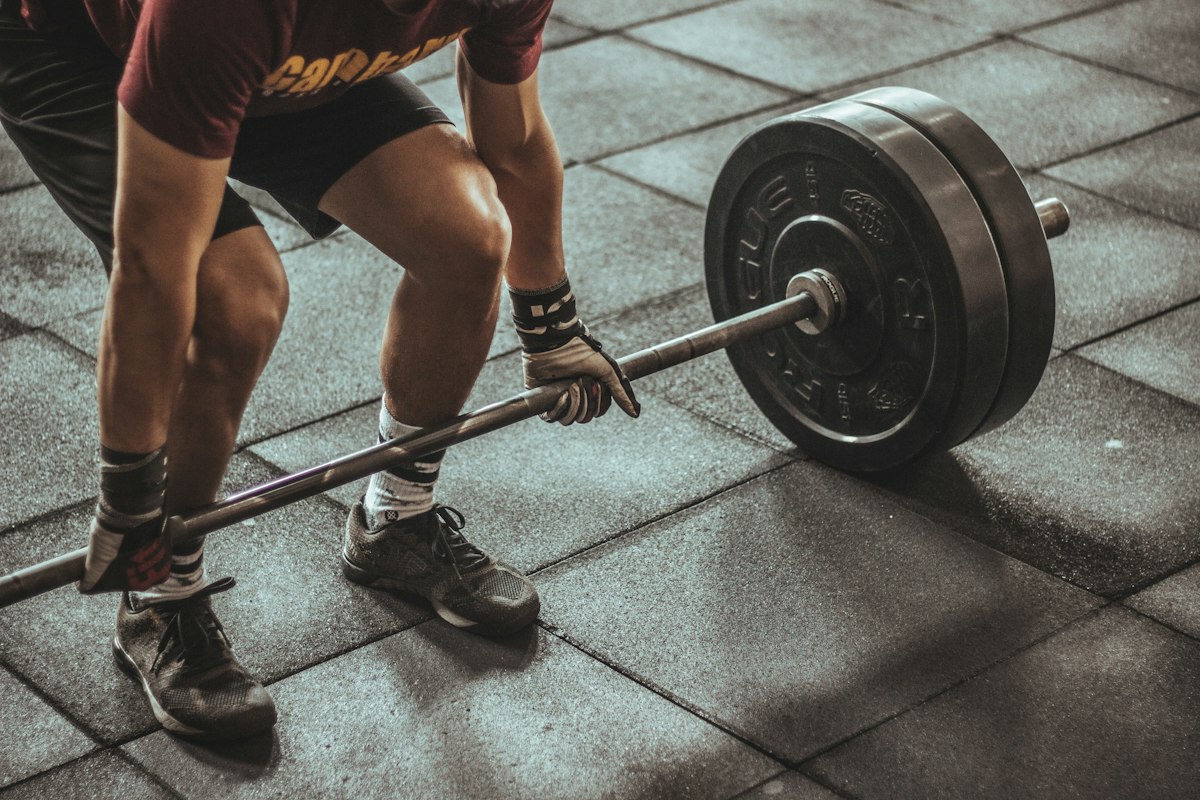
I get this question more than almost any other, usually from a guy standing at the rack staring at a barbell like it owes him money: "Should I go heavy and low reps, or lighter and more reps?" He's usually asking because he saw two different "experts" online give him two opposite answers, and now he's paralyzed.
Here's the thing — both answers can be right, depending on what you're actually training for. Strength and size are related, but they're not the same adaptation, and the research on this is a lot clearer than the gym-bro debates make it sound. Let's break down what the science actually says, not what sounds good in a YouTube thumbnail.
Why There's No Single "Best" Rep Range
For decades, the fitness industry sold a simple chart: 1-5 reps for strength, 6-12 for size, 15+ for endurance. Clean, tidy, easy to put on a poster. Problem is, a 2021 review by Brad Schoenfeld and colleagues in the journal Sports — appropriately titled a "re-examination of the repetition continuum" — found that reality is messier than that chart. Muscle growth can happen across a huge range of loads, from as light as 30% of your one-rep max all the way up near your max, as long as the effort level is high enough. Strength, on the other hand, responds much more specifically to how heavy the weight actually is. So the honest answer to "what's the best rep range" is: it depends on which adaptation you're chasing, and effort matters as much as the number on the plate.
If Your Goal Is Maximal Strength, Go Heavy
If you want your bench, squat, and deadlift numbers to go up, the research is pretty consistent: heavier loads win. A 2017 meta-analysis by Schoenfeld, Grgic, Ogborn, and Krieger, published in the Journal of Strength and Conditioning Research, pooled data across multiple studies comparing low-load training (think 15+ reps) against high-load training (think sets of 8 or fewer, generally over 60% of 1RM). The result: high-load training produced significantly greater gains in maximal strength. This lines up with what the American College of Sports Medicine has recommended for years in its resistance training guidelines — loads in roughly the 1-6 rep range (85%+ of your max) for building peak strength. The nervous system gets better at producing force under heavy loads partly because you're practicing the exact skill you're trying to improve. You get strong at what you train. If 1-rep-max strength is the target, you have to spend real time under heavy iron.
If Your Goal Is Size, the Rep Range Is More Flexible
Here's where it gets interesting, and honestly, kind of freeing. That same 2017 Schoenfeld meta-analysis found that when sets were taken close to failure and total volume was roughly matched, muscle growth was similar between low-load and high-load training. Translation: a guy doing sets of 25 with lighter weight can build just as much muscle as a guy doing sets of 6, provided both of them are actually pushing those sets hard. The 2021 repetition continuum review backs this up — it's the mechanical tension and metabolic stress generated by training close to effort limits that drives growth, not some magic number of reps. This is genuinely useful for guys with cranky shoulders, elbows, or knees who can't always load the bar heavy. You're not missing out on muscle growth by training in the 12-20 rep range, as long as you're grinding those last few reps.
The Real Variable Hiding in Plain Sight: Proximity to Failure
This is the part most guys skip right past. A 2024 series of meta-regressions published in Sports Medicine by Refalo and colleagues looked specifically at how close to failure you need to train to get results. For muscle growth, training closer to failure was associated with better outcomes. For strength, the relationship was weaker and less consistent — meaning you don't necessarily need to grind every single set to failure to get stronger, especially on heavy compound lifts where form breakdown near failure can actually work against you. The point isn't "always go to failure." The point is that effort, not just the rep number on your program, is doing a huge chunk of the work. A set of 10 with five reps left in the tank is a very different stimulus than a set of 10 where the bar nearly pins you to the bench.
The Takeaway
Stop treating "what rep range should I use" like it has one universal answer, because it doesn't. If maximal strength is the priority — you want bigger numbers on your lifts — spend most of your training in that 1-6 rep range with heavy loads, because that's the skill and the adaptation you're practicing. If building size is the priority, you've got a lot more freedom: moderate reps, higher reps, even mixing both, as long as you're training with real intent and getting close to your limit on your hardest sets. And if you want both, which most of my clients do, the smartest approach is usually a blend — some heavy, lower-rep work for strength, and some moderate-to-higher rep work pushed hard for size. Pick the tool that matches the job, and stop arguing about rep ranges like they're a religion.
References
- Schoenfeld, B. J., Grgic, J., Ogborn, D., & Krieger, J. W. (2017). Strength and Hypertrophy Adaptations Between Low- vs. High-Load Resistance Training: A Systematic Review and Meta-analysis. Journal of Strength and Conditioning Research, 31(12), 3508-3523.
- Schoenfeld, B. J., Grgic, J., Van Every, D. W., & Plotkin, D. L. (2021). Loading Recommendations for Muscle Strength, Hypertrophy, and Local Endurance: A Re-Examination of the Repetition Continuum. Sports, 9(2), 32.
- Refalo, M. C., Helms, E. R., Trexler, E. T., Hamilton, D. L., & Fyfe, J. J. (2024). Exploring the Dose-Response Relationship Between Estimated Resistance Training Proximity to Failure, Strength Gain, and Muscle Hypertrophy: A Series of Meta-Regressions. Sports Medicine, 54(7).
- American College of Sports Medicine. Position Stand: Progression Models in Resistance Training for Healthy Adults. Medicine & Science in Sports & Exercise.
Keep Reading
Best Rep Ranges for Women's Strength and Muscle-Tone Goals
Read More →
Progressive Overload: The Science of Continuous Strength Gains
Read More →
Discussion