
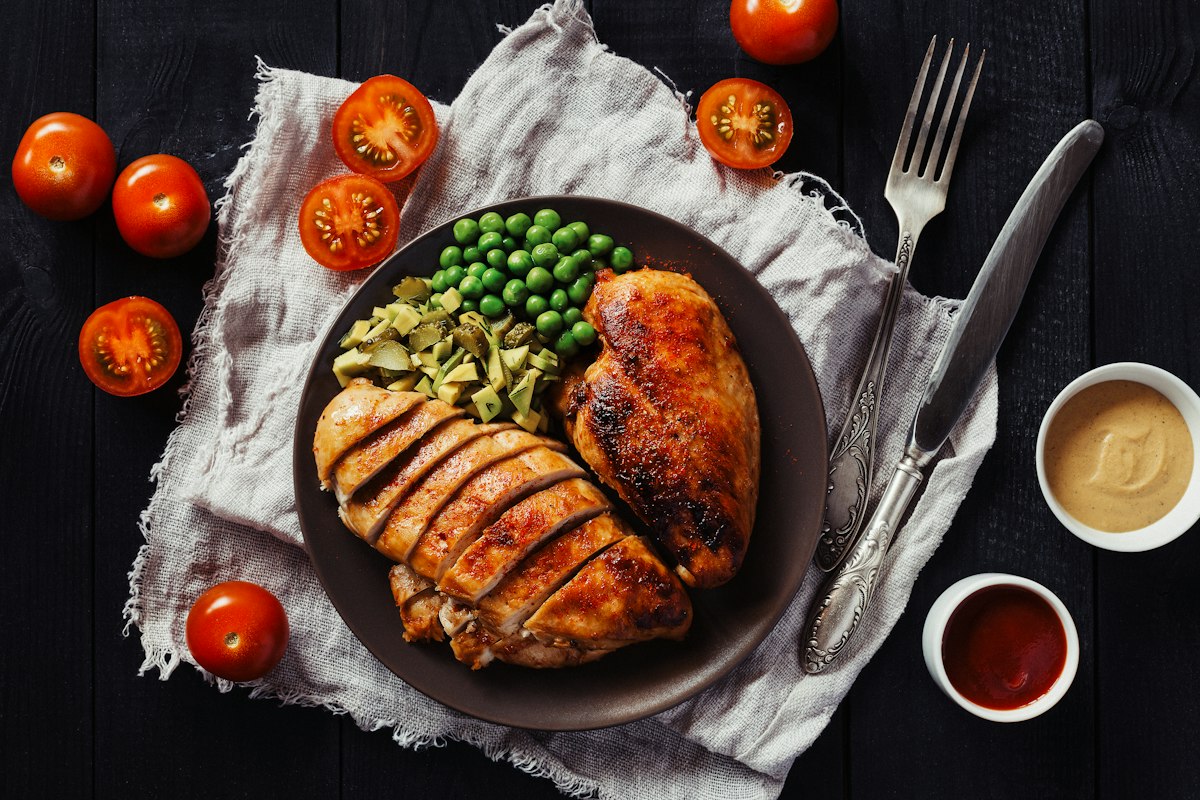
"Eat big to get big" has been gym gospel forever, with plenty of guys assuming a bigger surplus just means more gains. A well-designed 2023 study put that assumption directly to the test, and the results are worth knowing before your next bulk.
The Study
Published in Sports Medicine – Open in 2023, researchers Eric Helms, Alyssa-Joy Spence, and colleagues ran an 8-week trial comparing three groups of resistance-trained individuals: one eating at maintenance calories, one in a moderate 5% calorie surplus, and one in a large 15% calorie surplus. All groups followed the same structured resistance training program.
What Actually Happened
The results directly challenge the "more surplus, more gains" assumption:
- Strength: The moderate 5% surplus group actually showed the strongest evidence of improved bench press strength — outperforming both the large surplus group and the maintenance group.
- Muscle thickness: There was no meaningful difference in quadriceps or biceps muscle thickness between any of the three groups — the large surplus group did not build more visible muscle than the moderate surplus group.
- Fat gain: Both surplus groups gained more fat than the maintenance group, but the effect was clearly present with even the moderate surplus — and the large surplus didn't provide a proportionally better strength or muscle return for the additional fat gained.
The researchers' overall conclusion: a larger calorie surplus mainly just adds more fat, without a corresponding advantage in strength or muscle gain. A modest surplus around 5% above maintenance appeared to be the more efficient approach.
Why "Eating Big" Backfires
Muscle protein synthesis — the process that actually builds new muscle tissue — has a ceiling. Your body can only build muscle so fast, regardless of how much extra food is available. Once you're past the calories needed to fuel that process (plus training and daily activity), any additional surplus isn't accelerating muscle growth — it's simply being stored as fat. This is exactly the pattern the Helms et al. data shows: the extra 10 percentage points of surplus between the moderate and large groups bought essentially nothing in additional muscle, but did add more fat.
What a Smarter Bulk Looks Like
- Aim for roughly a 5-10% calorie surplus above maintenance, not a dramatic 500-1000+ calorie overshoot. This is a meaningfully smaller surplus than a lot of traditional bulking advice suggests.
- Prioritize protein (research consistently supports 1.6 g/kg per day or higher) to make sure the extra calories are actually being used to support muscle repair and growth, not just general overfeeding.
- Keep training hard and progressively — the surplus only pays off if it's paired with a training stimulus that's actually driving adaptation; extra food without extra training demand just becomes fat, full stop.
- Track your rate of weight gain, aiming for something in the range of about 0.25-0.5% of body weight per week — this keeps you in the territory the research supports, rather than drifting into an oversized surplus by accident.
The Takeaway
More food is not automatically more muscle. The research is fairly direct here: a modest, well-controlled surplus paired with solid training and adequate protein builds muscle just as effectively as a large surplus — without the extra fat gain that comes along for the ride. A lean bulk isn't a compromise on your gains; based on this study, it might actually be the smarter version of bulking altogether.
References
- Helms, E. R., Spence, A-J., Sousa, C., Krieger, J., Taylor, S., Oranchuk, D. J., Dieter, B. P., & Watkins, C. M. (2023). Effect of Small and Large Energy Surpluses on Strength, Muscle, and Skinfold Thickness in Resistance-Trained Individuals: A Parallel Groups Design. Sports Medicine – Open, 9, 100.


Discussion