
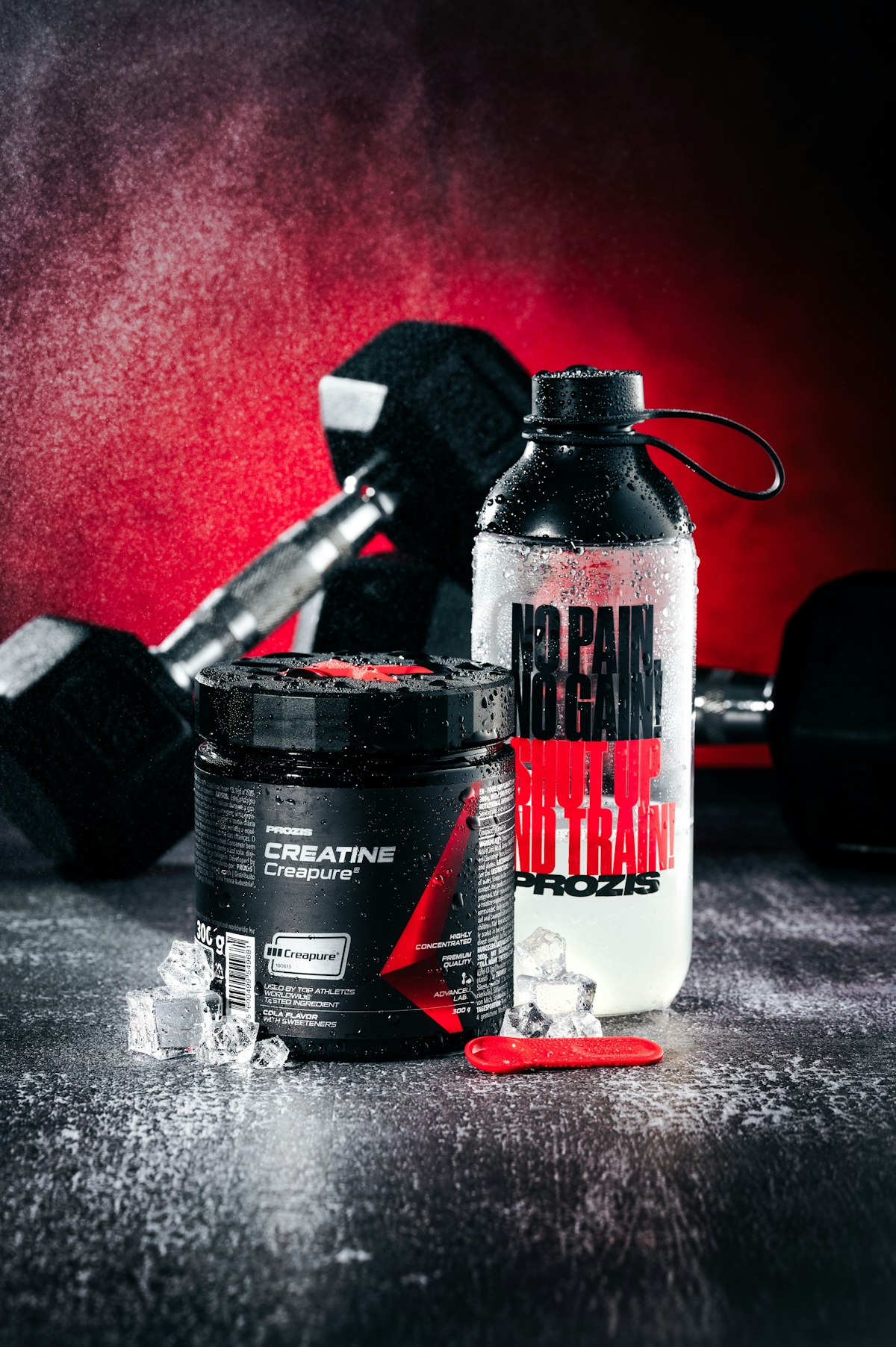
Alright, let's talk about creatine. If you've spent any time in a gym, scrolling fitness TikTok, or just standing near the supplement aisle, you've heard something about it. "It'll make you bloated." "You have to load it or it won't work." "It's basically a steroid." "It'll make you go bald." I've heard every version of this from the dads and grandpas I coach, and almost none of it holds up.
Here's the thing — creatine monohydrate isn't some new fad. It's one of the most heavily studied supplements in the history of sports science, with decades of research behind it. And for men specifically, trying to build strength, pack on muscle, and perform better in the gym, it's one of the few supplements I can tell you, with real confidence, actually works. Not bro science. Research.
So let's break down what the science actually says — what it does, how to take it, and whether you need to worry about any of the scary stuff you've heard.
What Creatine Actually Does for You
Creatine helps your muscles regenerate ATP faster — ATP is basically the fuel your muscles burn during short, hard efforts like a heavy squat or a sprint up a hill. More available fuel means you can squeeze out another rep, push a little harder, and recover a little faster between sets. Over weeks and months, that adds up to more strength and more muscle.
This isn't my opinion. The International Society of Sports Nutrition (ISSN) released an official position stand on creatine back in 2017, and their conclusion was blunt: creatine monohydrate is "the most effective ergogenic nutritional supplement currently available to athletes" for increasing high-intensity exercise capacity and building lean muscle mass during training. That's not a supplement company talking. That's a scientific organization reviewing the full body of research and putting their name on it.
Do You Need to "Load" Creatine?
This is the question I get constantly. Here's what the research shows: a classic study by Hultman and colleagues found that loading — taking around 20 grams a day for 5-7 days — saturates your muscle's creatine stores fast. But a slower approach, around 3 grams a day for about a month, gets you to basically the same saturation point. Loading just gets you there quicker.
So no, you don't need to load. I tell my guys to just take 3-5 grams a day, every day, forever. It's simpler, it's gentler on your stomach, and you end up in the same place.
"It Makes You Bloated" and "It's Basically a Steroid"
Let's kill two myths at once. A 2021 review in the Journal of the International Society of Sports Nutrition dug into exactly these claims. On bloating: yes, you may see a small, temporary increase in water in the first few days, especially if you load — but that water is going into your muscle cells, not sitting under your skin puffing up your face. It's not the kind of "bloat" guys picture, and it generally isn't a lasting issue at normal maintenance doses.
On the steroid comparison — this one actually bugs me, because it keeps good men from trying something that could genuinely help them. Creatine is a completely different molecule from anabolic steroids. Steroids work by binding to androgen receptors and altering hormone signaling throughout your body. Creatine just helps regenerate energy in your muscle cells. Same gym bag, completely different category.
Does Creatine Cause Hair Loss?
This is the one that makes guys nervous, and I want to be straight with you about what the actual study found — not the exaggerated version that gets passed around. In 2009, researchers (van der Merwe and colleagues) had college rugby players load creatine for a week, then take a maintenance dose for two more weeks. They found that DHT — a hormone linked to male pattern baldness in genetically predisposed men — rose by about 56% after the loading week and stayed elevated afterward. Testosterone itself didn't change.
Here's the part that matters: that study measured a hormone in blood, not actual hair loss. Nobody's scalp was examined. No one tracked hair counts. It's one study, it's never been directly tied to real-world hair loss, and it hasn't been widely replicated. If you're already prone to male pattern baldness, it's worth knowing this exists. But "one hormone went up in one small study" is a long way from "creatine will make you go bald."
Is Creatine Safe for Your Kidneys Long-Term?
This is the legitimate concern, and it deserves a real answer. The ISSN's position stand reviewed long-term creatine use — including studies tracking people for up to five years — and found no evidence of harm to kidney or liver function in healthy individuals. A 2023 narrative review in the journal Nutrients looked specifically at the "creatine damages your kidneys" claim and came to the same place: in healthy people, there's no credible evidence that typical creatine supplementation causes kidney damage. Part of the confusion is that creatine supplementation raises your creatinine levels on a blood test — but that's a predictable side effect of how creatine is metabolized, not a sign your kidneys are struggling.
If you already have kidney disease, talk to your doctor first — that's just smart. But for a healthy guy taking a normal 3-5 gram daily dose, the fear isn't backed by the research.
The Takeaway
Here's what I want you to walk away with: creatine monohydrate is one of the most researched, most proven supplements out there, and for men trying to build strength and muscle, it works. You don't need to load it — 3-5 grams a day is enough. The bloating fear is overblown, it's nothing like a steroid, the hair loss link comes from a single small study measuring a hormone, not actual hair loss, and for healthy guys, it's not hurting your kidneys. Skip the hype in either direction. Just take it consistently, keep training hard, and let the research — not the internet rumor mill — guide you.
References
- Kreider, R. B., Kalman, D. S., Antonio, J., Ziegenfuss, T. N., Wildman, R., Collins, R., Candow, D. G., Kleiner, S. M., Almada, A. L., & Lopez, H. L. (2017). International Society of Sports Nutrition position stand: safety and efficacy of creatine supplementation in exercise, sport, and medicine. Journal of the International Society of Sports Nutrition, 14, 18.
- Antonio, J., Candow, D. G., Forbes, S. C., Gualano, B., Jagim, A. R., Kreider, R. B., Rawson, E. S., Smith-Ryan, A. E., VanDusseldorp, T. A., Willoughby, D. S., & Ziegenfuss, T. N. (2021). Common questions and misconceptions about creatine supplementation: what does the scientific evidence really show? Journal of the International Society of Sports Nutrition, 18, 13.
- Hultman, E., Soderlund, K., Timmons, J. A., Cederblad, G., & Greenhaff, P. L. (1996). Muscle creatine loading in men. Journal of Applied Physiology, 81(1), 232-237.
- van der Merwe, J., Brooks, N. E., & Myburgh, K. H. (2009). Three weeks of creatine monohydrate supplementation affects dihydrotestosterone to testosterone ratio in college-aged rugby players. Clinical Journal of Sport Medicine, 19(5), 399-404.
- Longobardi, I., Gualano, B., Seguro, A. C., & Roschel, H. (2023). Is it time for a requiem for creatine supplementation-induced kidney failure? A narrative review. Nutrients, 15(6), 1466.



Discussion