
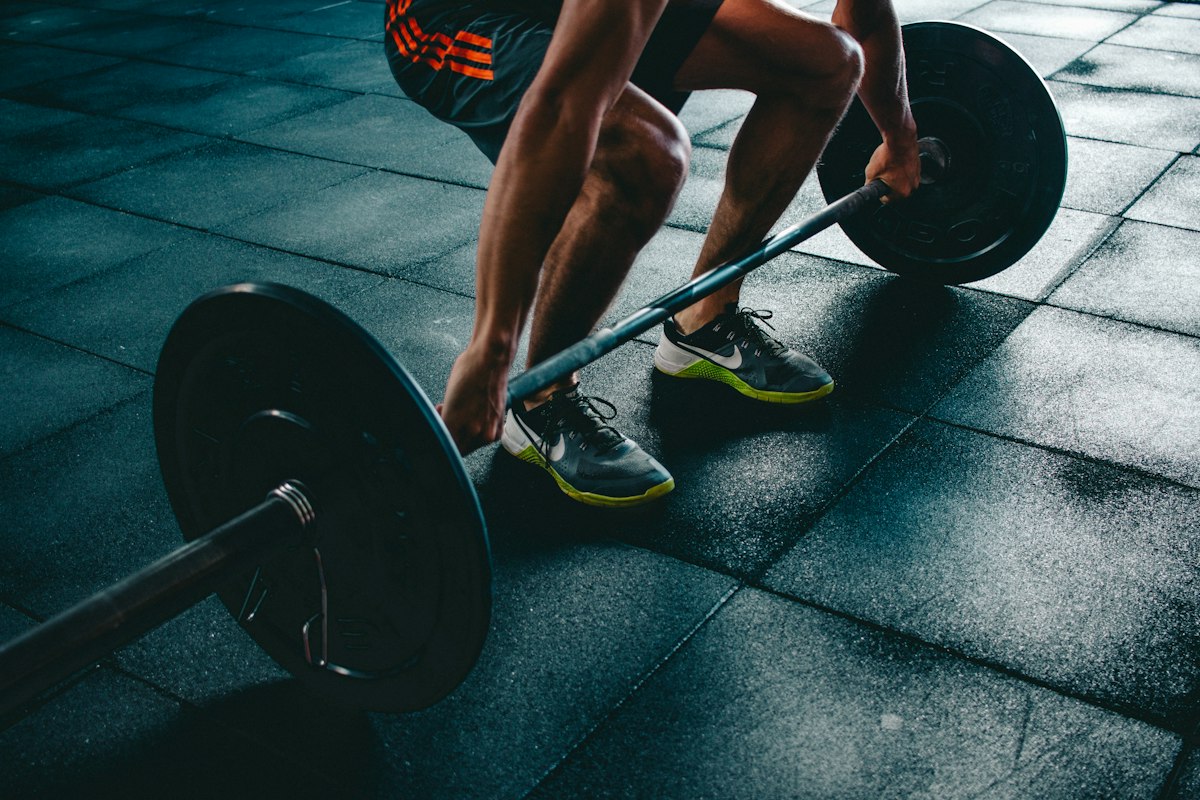
"Keep your back perfectly neutral or you'll get hurt" has been drilled into lifters for decades. A 2026 review takes a hard look at that assumption — and the actual research doesn't support it nearly as strictly as gym folklore suggests.
Rethinking "Neutral Spine at All Costs"
A narrative review published in the journal Sports (MDPI) in 2026, by researchers Bilel Cherni, Hamza Marzouki, and colleagues, directly challenged the traditional "neutral spine or bust" coaching dogma around deadlifting. Their key conclusion: moderate lumbar flexion (rounding) during a deadlift is not inherently pathological. The review found that trained lifters naturally exhibit some degree of spinal flexion under load, without clear evidence that this alone drives higher injury rates.
This doesn't mean form doesn't matter — it means the specific fear that any rounding of the lower back during a deadlift is automatically dangerous isn't well supported by the evidence the way it's often presented.
So What Actually Predicts Injury?
The review's more important finding is about what does predict back injury in lifters: load management, not posture, appears to be the stronger and more consistent predictor. Specifically, the researchers highlighted that rapid, poorly managed changes in training exposure — sudden jumps in weight, volume, or frequency without adequate adaptation time — were more consistently linked to injury risk than deviations from a "perfect" neutral spine position.
This matches a broader, well-established pattern in sports injury research across many activities: sudden spikes in training load are one of the most reliable predictors of injury, often more so than technique details that get far more attention.
What This Changes About How to Train the Deadlift
Rather than obsessing over rigid postural perfection on every single rep, the review points toward a more useful framework:
- Progressive loading with structured deload phases — building weight up gradually and periodically backing off, rather than pushing your training load up sharply and inconsistently.
- Accepting some movement variability between reps, rather than forcing an identical, rigid position on every single repetition — real human movement under load isn't perfectly robotic, and forcing it to be may create more tension and altered mechanics than it prevents.
- Building dynamic trunk strength — anti-rotation core work and loaded carries — rather than relying solely on static core bracing drills as the main form of "core training" for deadlift support.
- Coaching confidence, not fear. The review specifically calls out that fear-avoidance messaging (treating every rep like it could snap your spine if it's not perfect) may do more harm than good, versus intent-driven coaching that builds a lifter's trust in their own movement.
Practical Takeaways for Your Deadlift
- Don't panic about minor, natural rounding under heavy load if your training progression has been sensible — the bigger risk factor is likely how you got to that weight, not the millimeter of spinal position.
- Progress your loading gradually. Avoid large, sudden jumps in weight or volume, especially after time off or when returning from a break.
- Build general trunk resilience with varied core and carry work, not just static planks and bracing drills.
- Get coached on the big picture — bar path, hip hinge pattern, and consistent effort across weeks — rather than fixating on achieving a textbook-perfect spine position on every rep.
The Takeaway
The old "neutral spine or injury" framing oversimplifies what the evidence actually shows. Load management — how you build up your training over time — appears to matter more for preventing back injury than achieving postural perfection on every rep. That's genuinely useful news for lifters who've been training with unnecessary fear about natural movement variability.
References
- Cherni, B., Marzouki, H., Selmi, O., Al Attar, W., Chamari, K., & Suzuki, K. (2026). Beyond the Neutral Spine: A Narrative Review and Modern Framework for Low Back Injury Prevention in Deadlifting. Sports, 14(4), 151.



Discussion