
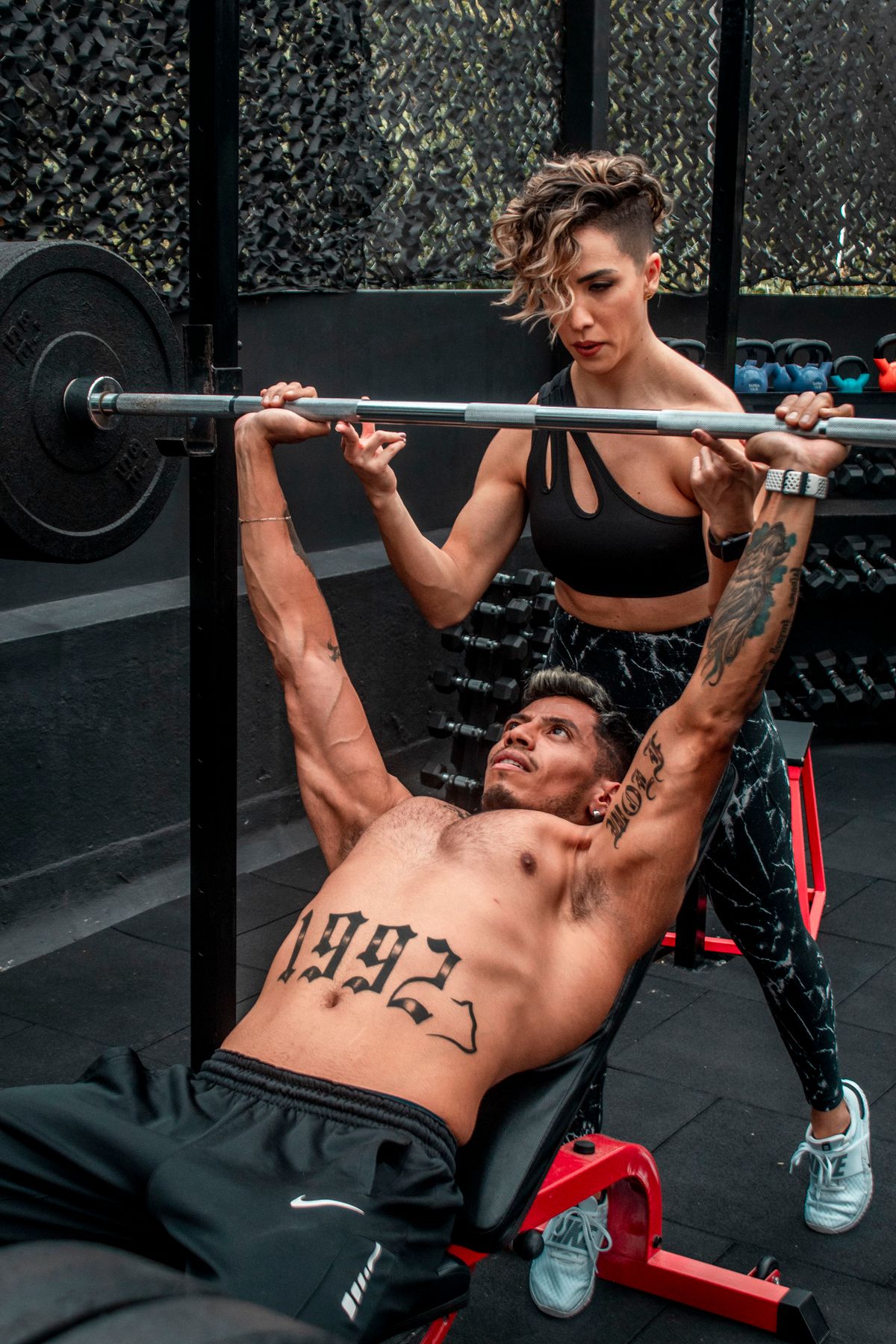
If you've trained seriously for any length of time, you've probably dealt with — or trained around — a cranky shoulder. It's not bad luck; it's one of the most consistently documented injury sites in strength sports.
The Injury Data
A 2024 updated systematic review published in BMJ Open Sport & Exercise Medicine, led by Lars Berglund and colleagues, examined injury patterns across weightlifting and powerlifting. The shoulder showed up as one of the most commonly injured areas in both sports: in weightlifting, the most common injury sites were the knee, lower back, shoulder, and hands/fingers; in powerlifting, they were the lower back/pelvis, shoulder, and elbow/upper arm. Across both strength sports, the shoulder is consistently a top-three injury location.
What's Actually Happening at the Joint
A 2024 study in Frontiers in Physiology, led by researcher L. Noteboom, used detailed musculoskeletal modeling on 10 experienced athletes performing 21 different bench press variations to measure exactly how technique affects shoulder joint loading. Some of the key findings:
- Wider grips (beyond about 1.5 shoulder widths) increased compression at the acromioclavicular joint and increased posterior shear force and rotator cuff activity — all factors linked to greater injury risk over time.
- Narrower grips reduced those same forces, potentially lowering the risk of issues like distal clavicular osteolysis and glenohumeral (shoulder joint) instability.
- Retracting the shoulder blades (pulling them together and down before and during the press) significantly reduced both compression and shear forces at the shoulder compared to a neutral, un-retracted position.
- There was also substantial variation between individual athletes in how they applied force through the bar, which meaningfully affected the load on their own shoulders — meaning technique cues that work for one lifter may need adjusting for another.
Why Shoulders Take the Brunt of It
The shoulder is the most mobile joint in the body — which is exactly why it's also one of the least inherently stable, relying heavily on the surrounding rotator cuff muscles and scapular positioning for support rather than bony structure. High training volume, pressing frequently without adequate recovery, and technique breakdown under fatigue are all common contributors to the kind of cumulative overuse injuries (as opposed to single traumatic incidents) that show up repeatedly in the injury research.
What the Research Supports Doing About It
- Retract your shoulder blades before and during pressing movements — this is one of the more directly supported technique changes from the biomechanics research above.
- Use a moderate grip width rather than maximally wide, particularly if you already have shoulder discomfort.
- Build dedicated rotator cuff and scapular stability work into your warm-up and accessory training, since these smaller stabilizing muscles are what keep the joint centered under load.
- Respect recovery between pressing sessions — the injury literature consistently points to overuse, not just single bad reps, as a major driver of shoulder problems in lifters.
- Address technique breakdown before it becomes chronic — pain that shows up repeatedly under load is a sign to correct form or reduce volume, not to push through.
The Takeaway
Shoulder injuries in lifters aren't random — they're a well-documented pattern tied to specific, identifiable technique and loading factors. Grip width, scapular positioning, and training volume are all levers you can actually control, and the biomechanics research gives fairly specific, actionable guidance on how to adjust them.
References
- Berglund, L., Lopes, A. D., Tung, M. J., & Lantz, G. A. (2024). Injuries in weightlifting and powerlifting: an updated systematic review. BMJ Open Sport & Exercise Medicine.
- Noteboom, L., Belli, I., Hoozemans, M. J. M., Seth, A., Veeger, H. E. J., & Van Der Helm, F. C. T. (2024). Effects of bench press technique variations on musculoskeletal shoulder loads and potential injury risk. Frontiers in Physiology.
Discussion