
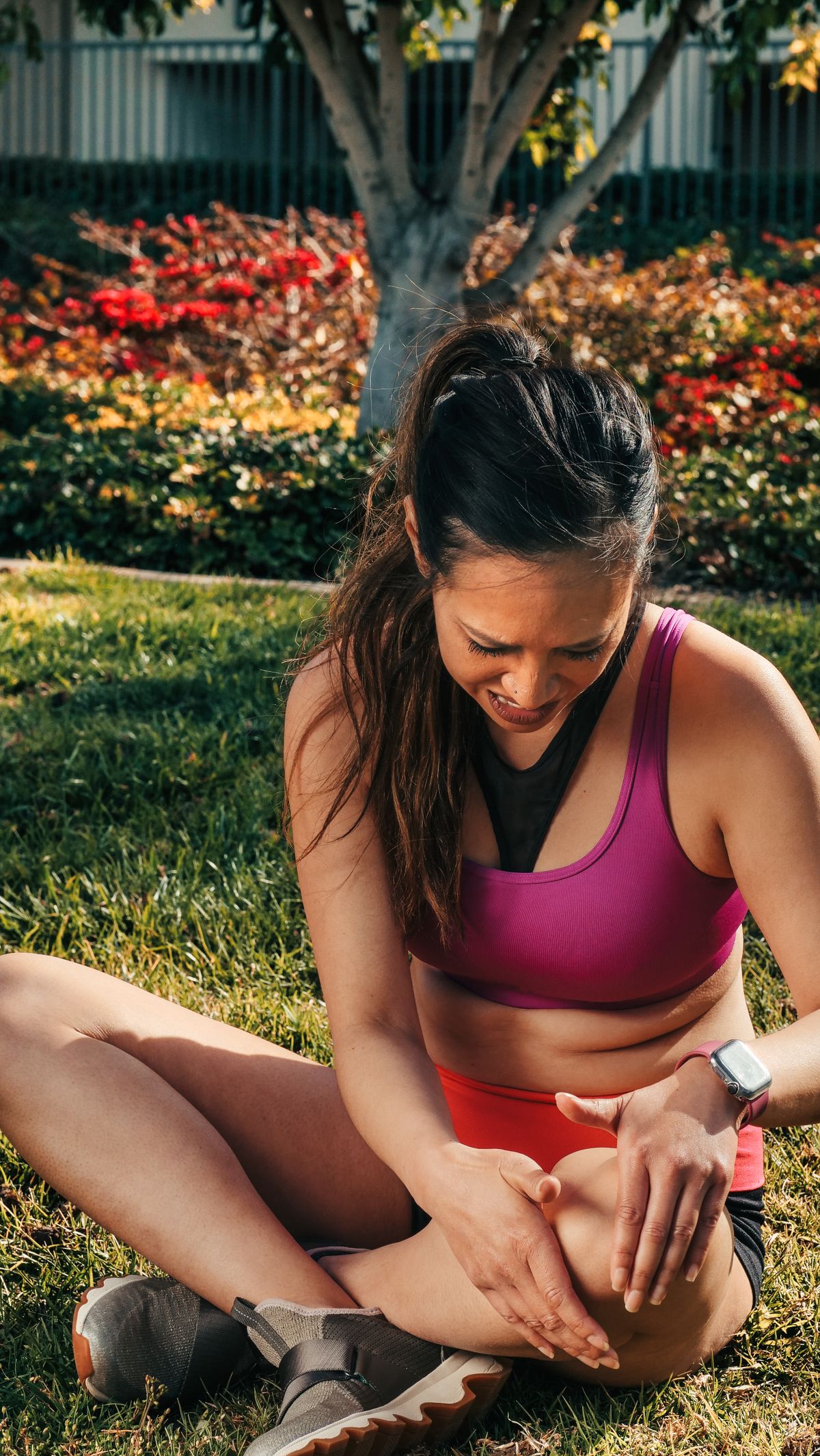
If you've noticed more of your female training clients or friends dealing with knee pain or ACL tears than the men around them, it's not your imagination — it's backed by real injury data and biomechanics research.
The Numbers
Research cited by the American Council on Exercise (ACE) shows that female athletes face 3.5 times the risk of a non-contact ACL injury compared to male athletes in comparable sports. This isn't a small gap — it's one of the most consistent findings in sports medicine.
Why: Anatomy Plays a Role, But It's Not the Whole Story
Several anatomical differences are commonly cited:
- A larger Q-angle (the angle formed between the quadriceps muscle and the patellar tendon), driven by a greater pelvis-to-femur length ratio and wider hips in women, creating more lateral stress on the knee joint.
- Narrower femoral notch width, which has been correlated with ACL injury risk in some research.
- One study found that a 10% increase in Q-angle was associated with a 45% increase in patellofemoral joint stress.
However, the research is careful to point out that Q-angle alone is a poor independent predictor of injury risk — most real-world knee injuries happen from a combination of frontal-plane and rotational (transverse-plane) forces, not from a single static angle measurement.
The Movement Patterns That Matter More
Research points to specific movement patterns during landing, cutting, and single-leg activities as major contributors to injury risk in women:
- Dynamic knee valgus — the knee collapsing inward during landing or squatting.
- Contralateral pelvic drop — the hip on the non-weight-bearing side dropping during single-leg stance.
- Excessive internal rotation of the hip and knee during deceleration.
Hormonal fluctuations, neuromuscular control differences, and core/hip stability have also all been implicated as contributing factors in the research.
What Actually Helps Reduce Risk
Because the risk is driven by a mix of anatomy and movement quality — and only the movement quality part is trainable — prevention research focuses on:
- Neuromuscular training programs that specifically target landing mechanics (how you absorb force when jumping or stepping down).
- Glute and hip strengthening, since weak hip stabilizers are strongly linked to the valgus collapse pattern.
- Single-leg stability work (step-downs, single-leg RDLs, lateral band walks) to build control in the movement patterns most tied to injury.
- Coaching landing and cutting mechanics — teaching an athlete to land softly, with knees tracking over toes, rather than relying on instinct alone.
The Takeaway
Women's higher knee injury risk is real and well-documented, driven by a combination of anatomy and movement patterns. While you can't change your Q-angle, you absolutely can train the neuromuscular control, hip strength, and landing mechanics that the research shows make the biggest practical difference in reducing that risk.
References
- American Council on Exercise (ACE Fitness), Are Your Female Clients at Greater Risk for Knee Problems? (2019), citing research on Q-angle, dynamic valgus, and ACL injury risk in female athletes.
- Impact of the Quadriceps Angle on Health and Injury Risk in Female Athletes. International Journal of Environmental Research and Public Health (MDPI), 2024.
Discussion