
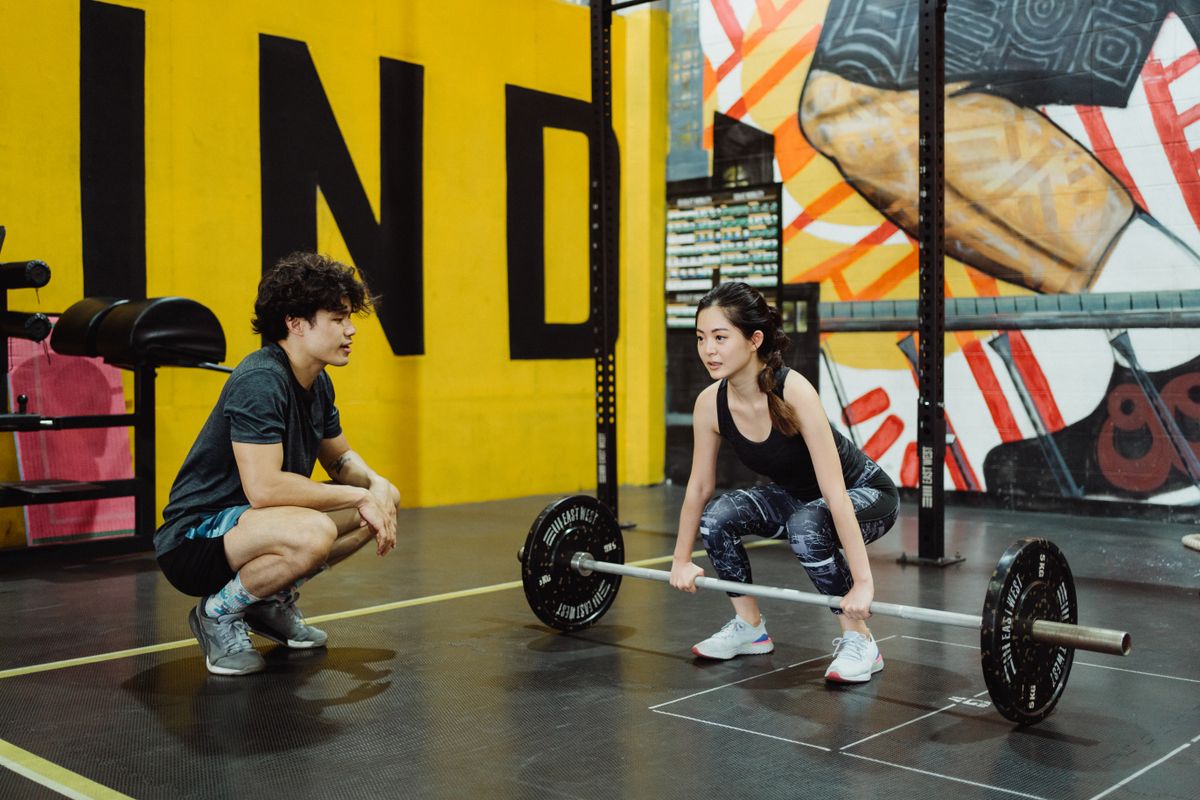
If you've ever hesitated to pick up a heavier dumbbell because you were afraid of "getting too bulky," you're not alone — and you've also been misled. This is one of the most persistent myths in fitness, and it doesn't hold up against the exercise science.
The Hormone That Actually Builds Bulk
Significant muscle hypertrophy — the kind that builds visibly large, dense muscle — is driven primarily by testosterone. According to a major review of the hormonal basis of sex differences in athletic performance published in Endocrine Reviews, adult men circulate roughly 10 to 20 times more testosterone than adult women. That single hormonal gap is the main reason men, on average, build muscle mass faster and to a greater ceiling than women, even when following identical training programs.
Women's bodies simply don't have the hormonal environment to spontaneously "bulk up" the way many fear. What women do build with heavy resistance training is meaningful, functional strength — often without a proportional jump in muscle size, especially in the first several months of training, when strength gains come largely from the nervous system learning to recruit muscle more efficiently, not from the muscle itself growing dramatically.
Muscle Growth Is Slow, Deliberate Work
Building a large amount of visible muscle takes a specific, sustained combination: progressive overload (systematically increasing weight, reps, or volume over time), a caloric surplus, and years of consistent training. Research on training frequency and hypertrophy — including systematic reviews by exercise scientist Brad Schoenfeld and colleagues — shows that even under ideal conditions, meaningful hypertrophy accumulates gradually, often measured in single-digit percentages of muscle cross-sectional area over months of dedicated training.
Female bodybuilders and physique athletes who do carry significant visible muscle have typically spent years in highly specific hypertrophy-focused programming with a deliberate caloric surplus — a very different approach than someone lifting a barbell three times a week for general strength and health.
What Heavy Lifting Actually Gives Women
The research on resistance training in women points to benefits that have nothing to do with unwanted bulk:
- Stronger bones. Loading the skeleton through resistance training is one of the most effective known strategies for building and preserving bone mineral density, which matters enormously for long-term osteoporosis prevention.
- A leaner appearance. Muscle is denser than fat, so building modest amounts of lean tissue while managing body fat typically produces a firmer, more "toned" look — the exact aesthetic most women say they're after.
- Better metabolic health. More lean muscle mass improves insulin sensitivity and resting metabolic rate.
- Real-world strength and independence that carries into daily life and protects against injury and frailty with age.
The Takeaway
The fear of getting "bulky" from heavy lifting isn't backed by the physiology. Women's hormonal environment makes dramatic, accidental muscle growth extremely unlikely. If anything, avoiding heavier weights means leaving strength, bone density, and body composition benefits on the table. Lift heavy, lift with good form, and let the science — not the myth — guide your training.
References
- Handelsman, D. J., Hirschberg, A. L., & Bermon, S. (2018). Circulating Testosterone as the Hormonal Basis of Sex Differences in Athletic Performance. Endocrine Reviews, 39(5), 803–829.
- Schoenfeld, B. J., Grgic, J., & Krieger, J. (2019). How many times per week should a muscle be trained to maximize muscle hypertrophy? A systematic review and meta-analysis of studies examining the effects of resistance training frequency. Journal of Sports Sciences.
Discussion