

Osteoporosis is often talked about as something that just happens with age — bad luck, bad genetics, nothing to be done. The research on resistance training tells a very different story: bone, like muscle, responds directly to the load you put on it.
Bone Is a Living Tissue That Adapts to Stress
Bone remodels itself constantly throughout life, and mechanical loading is one of the strongest signals telling your body to keep that bone dense rather than let it thin out. This matters enormously for women, who face a much steeper drop in bone density after menopause as estrogen — a hormone that helps protect bone — declines. Left unaddressed, this can progress to osteopenia and eventually osteoporosis, dramatically raising fracture risk later in life.
What the Research Says Actually Works
A 2025 systematic review and meta-analysis published in the Journal of Orthopaedic Surgery and Research, led by researcher Hezhang Yun and colleagues, pooled the evidence on which resistance training variables actually move the needle for bone mineral density in postmenopausal women. Their findings were specific:
- Intensity matters most. Training at 70% of one-rep max or higher produced the strongest effects on bone density at the femoral neck and total hip — two of the most fracture-prone sites in older women.
- Frequency: three times per week showed significant improvements across multiple sites, including the lumbar spine, femoral neck, hip, and trochanter.
- Session length: Workouts of 40 minutes or longer were particularly effective for lumbar spine improvements.
- Consistency over time: Programs lasting 48 weeks or longer produced the clearest gains at the hip and femoral neck — this is not a quick fix, it's a long-term investment.
The researchers' conclusion was direct: a high-intensity program (≥70% 1RM), performed three times weekly, for a longer duration, appears to be the optimal formula for protecting bone in postmenopausal women.
Why Lighter, "Safer-Feeling" Training Often Falls Short
This is where a lot of well-meaning advice for older women goes wrong. Light resistance bands and bodyweight-only circuits feel safer, but the research is fairly consistent: bone needs a real mechanical stimulus — meaningful, heavier loading — to trigger the adaptations that actually increase density. This doesn't mean untrained women should jump straight into maxing out; it means the goal, built up progressively and safely, should be genuinely challenging resistance training, not indefinitely staying in the "light and easy" zone.
What This Looks Like in Practice
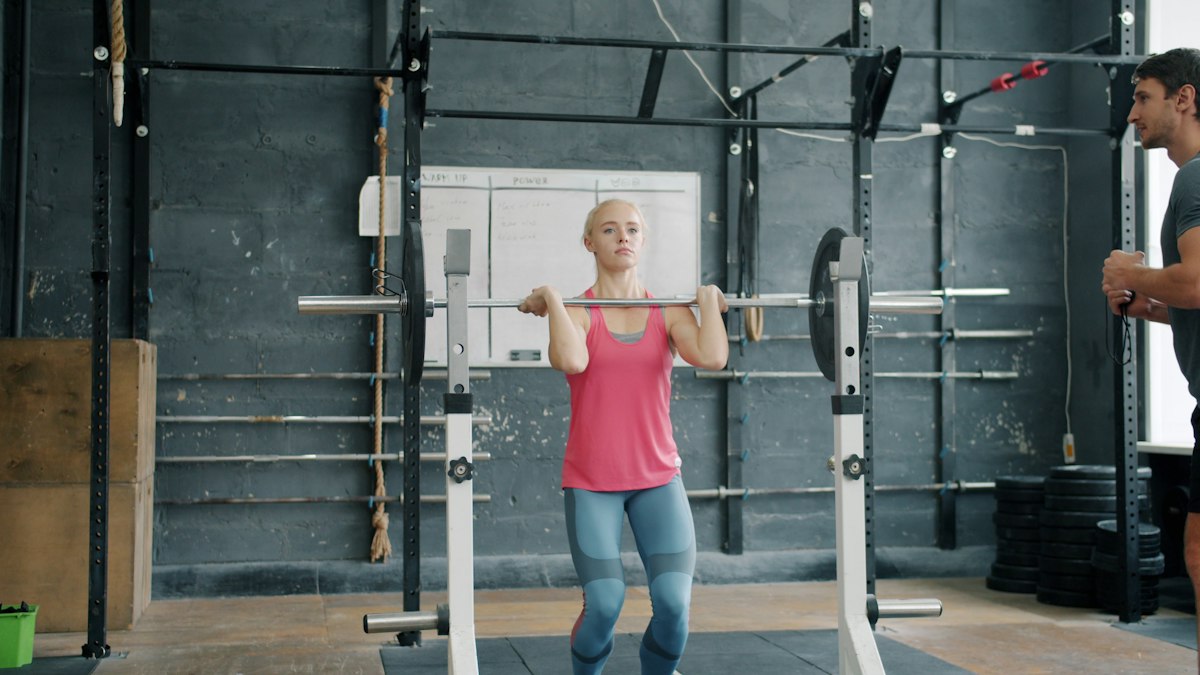
- Compound, loaded movements: squats, deadlifts (or safe variations), presses, and rows performed with real, progressively increasing weight.
- Training 3x per week, giving adequate recovery between sessions while hitting the frequency shown to matter in the research.
- A long time horizon. Bone adapts more slowly than muscle — expect the meaningful changes to show up over many months, not weeks, which is exactly why consistency is the whole game here.
- Starting now, not waiting. Bone density peaks in your 20s and 30s and gradually declines afterward — the earlier you build a strength training habit, the more bone "reserve" you're protecting for the years when estrogen decline accelerates the loss.
The Takeaway
Osteoporosis prevention is not primarily about calcium supplements or passive habits — though those matter too. The strongest lever the research identifies is a genuinely challenging, consistent resistance training program: heavy enough, frequent enough, and sustained long enough to tell your skeleton it's still needed. That's a very actionable, very controllable piece of your long-term health.
References
- Yun, H., Zhao, F., Su, W., Sun, Y., Wang, J., & Lu, B. (2025). Optimal resistance training parameters for improving bone mineral density in postmenopausal women: a systematic review and meta-analysis. Journal of Orthopaedic Surgery and Research.
Discussion