I had a client — mid-50s, in great shape her whole life — tell me, "I'm doing the same workouts I've always done, and I'm getting weaker, not stronger." She wasn't imagining it. She wasn't "just getting old." Something specific was happening in her body, and it had a name: menopause was accelerating her muscle loss, and the training that used to be enough simply wasn't enough anymore.
Here's the thing about muscle loss in women going through menopause — it's not a vague, generic "aging" story. It's a hormonal one, with a clear mechanism, a well-documented timeline, and — this is the important part — a well-documented fix. Let's get into what's actually happening and what the research says works.
Why Muscle Loss Speeds Up at Menopause
Estrogen isn't just a reproductive hormone. It's doing real work in your muscle tissue — supporting muscle repair, limiting inflammation, and helping maintain the quality and function of the muscle fibers you already have (Tiidus et al., 2013). When estrogen drops sharply at menopause, that support drops with it.
And the drop-off isn't gradual. A 2020 study out of the University of Jyväskylä followed women through the menopause transition and found that muscle mass and bone mass both declined faster specifically around the menopausal transition itself, not just as a slow continuation of normal aging (Sipilä et al., 2020). In other words, there's a window where the loss genuinely speeds up, tied directly to the hormonal shift — not just the candles on your birthday cake.
This matters because sarcopenia — the medical term for age-related muscle loss — isn't something that starts in your 70s. A comprehensive review on sarcopenia in menopausal women makes clear that the hormonal changes of menopause are an independent accelerator of muscle loss, on top of whatever normal aging was already going to do (Buckinx & Aubertin-Leheudre, 2022). If you wait until you "feel old" to start caring about this, you're starting from behind.
Anabolic Resistance: Why Your Body Needs More to Do the Same Job
This is the part almost nobody explains to my female clients, and it's the single biggest reason the "I'm doing what I've always done" workout stops working.
As women move through menopause, muscle tissue becomes less responsive to the normal signals that build and maintain it — a phenomenon researchers call anabolic resistance. Practically, that means the same dose of protein, and the same training stimulus, produces a smaller muscle-building response than it used to. Your body isn't broken. It just needs a bigger nudge to get the same result.
I want to be careful here, because the research on exactly how to overcome that resistance is more nuanced than "just eat more protein." A randomized clinical trial in postmenopausal women found that adding extra protein around resistance training sessions — manipulating the timing of intake — didn't improve lean mass, strength, or functional capacity gains beyond what resistance training alone produced (de Branco et al., 2020). That's an important, no-bro-science finding: the protein doesn't need to be perfectly timed. What it needs is to be adequate, consistently, alongside a real training stimulus. The resistance training itself — hard, progressive, consistent — is still doing the heavy lifting (literally). Protein timing is a minor lever; showing up and training hard is the major one.
The takeaway: don't assume effort alone will carry you the way it used to. Plan for needing more total stimulus — more consistent protein intake across the day and more deliberate training volume — just to maintain what you already have.
What the Research Actually Shows About Lifting Through Menopause
This is where I get to tell you the good news, because the data on resistance training in postmenopausal women is genuinely strong.
The LIFTMOR trial — a randomized controlled trial out of Griffith University — put postmenopausal women with low bone mass through eight months of high-intensity resistance and impact training: heavy deadlifts, overhead presses, and jumping, twice a week. Compared to a low-intensity home exercise group, the high-intensity group saw significantly greater improvements in bone mineral density at the spine and hip, along with better functional performance — all with no adverse events (Watson et al., 2018). I bring this trial up constantly with clients who are nervous about lifting heavy post-menopause, because it directly answers the fear: heavy, properly programmed resistance training is not just safe for this population, it's one of the most effective tools available.
That same broader review on menopausal sarcopenia I mentioned earlier is explicit about resistance training being a primary, evidence-backed intervention for preserving muscle mass and function through this life stage — not a nice-to-have, not optional, but foundational (Buckinx & Aubertin-Leheudre, 2022). This isn't "lift weights because it's generally good for you." This is "lift weights because it's one of the few interventions directly shown to counteract a specific physiological process working against you right now."
How I Program Strength Training Through Menopause
Given all of that, here's what I actually change for my clients going through this transition — not a totally different style of training, but a deliberately higher dose of the right stimulus: prioritizing heavy compound lifts like squats, deadlifts, presses, and rows, since these recruit the most muscle mass and create the strongest signal for maintenance now that the signal has to work harder to get through. I also push clients to train close to failure rather than just "tired," because anabolic resistance means a mediocre effort produces a smaller response than it used to — leave one, maybe two reps in the tank, not five.
I'm firm about not cutting training volume as life gets busier, which is the opposite of what most clients instinctively do mid-life — this is the one place where "maintenance mode" training actively works against you. I also add impact and loading for bone, not just muscle, since the LIFTMOR protocol combined heavy lifting with jumping and landing work specifically because bone responds to that kind of mechanical loading, and muscle and bone decline together here. And I treat protein as a daily non-negotiable rather than a post-workout ritual — spread consistently across meals, because the timing doesn't need to be perfect, but the total needs to be there.
None of this requires training like a powerlifter six days a week. It requires training with intent, consistently, and understanding that "the same as before" is a quietly losing strategy right now.
The Takeaway
Menopause changes the rules, whether you acknowledge it or not. Estrogen's drop removes a layer of natural protection for your muscle tissue, the loss accelerates specifically around the transition, and your body becomes harder to signal into building or even maintaining muscle. That's the bad news, and it's real.
The good news is just as real: resistance training — heavy, progressive, consistent — is one of the most well-studied, effective countermeasures we have. This isn't a phase to train through gently and hope for the best. It's a phase to train through deliberately, with a program built for what your body actually needs right now. My clients who shift that mindset — more intent, not necessarily more hours — are the ones who come out the other side stronger, not smaller.
References
- Tiidus, P. M., Lowe, D. A., & Brown, M. (2013). Estrogen replacement and skeletal muscle: Mechanisms and population health. Journal of Applied Physiology, 115(5), 569–578.
- Sipilä, S., Törmäkangas, T., Sillanpää, E., Aukee, P., Kujala, U. M., Kovanen, V., & Laakkonen, E. K. (2020). Muscle and bone mass in middle-aged women: Role of menopausal status and physical activity. Journal of Cachexia, Sarcopenia and Muscle, 11(3), 698–709.
- Buckinx, F., & Aubertin-Leheudre, M. (2022). Sarcopenia in menopausal women: Current perspectives. International Journal of Women's Health, 14, 805–819.
- Watson, S. L., Weeks, B. K., Weis, L. J., Harding, A. T., Horan, S. A., & Beck, B. R. (2018). High-intensity resistance and impact training improves bone mineral density and physical function in postmenopausal women with osteopenia and osteoporosis: The LIFTMOR randomized controlled trial. Journal of Bone and Mineral Research, 33(2), 211–220.
- de Branco, F. M. S., Carneiro, M. A. S., Rossato, L. T., Nahas, P. C., Teixeira, K. R. C., de Oliveira, G. N., Jr., Orsatti, F. L., & de Oliveira, E. P. (2020). Protein timing has no effect on lean mass, strength and functional capacity gains induced by resistance exercise in postmenopausal women: A randomized clinical trial. Clinical Nutrition, 39(1), 57–66.
Keep Reading

Strength Training and Bone Density: Preventing Osteoporosis
Read More →
Toning vs. Bulking: The Physiology of Women's Muscle Response to Training
Read More →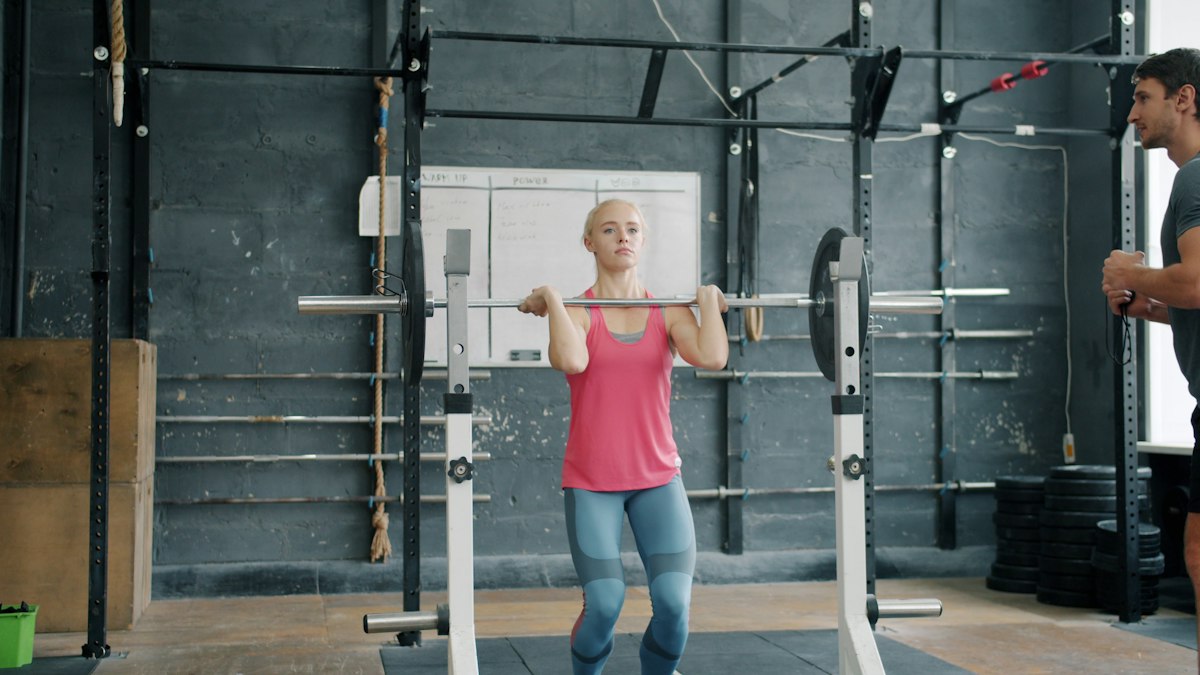
Discussion